Cusco · Peruinfo@perubiking.com+51 958 348 300
Three days circling the Apu Ausangate, entirely above 4,000 metres: two 5,100 m passes, Rainbow Mountain, coloured lagoons and hot springs.
Ausangate (6,384 m / 20,945 ft) is the highest mountain in the Cusco region and the fifth highest in Peru. But long before it was a geographical fact it was — and still is — an Apu: a guardian deity, worshipped since Inca times, protector of the communities living at its feet. Every year on its slopes thousands of Quechua pilgrims celebrate Qoyllur Rit'i, "star snow", a tradition of time immemorial inscribed by UNESCO as Intangible Cultural Heritage of Humanity.
This expedition circles the Apu in three days, through country the conventional tours never reach. It is considered one of the most beautiful routes on the planet, and riding it makes the reason obvious: glaciers calving into turquoise lagoons, valleys stained deep red, high Andean plains where there is nothing but silence and alpacas, and communities still living by ancestral customs.
The entire route runs between 4,150 and 5,100 metres. Not a single stretch drops below four thousand. That is why we ride e-bikes: electric assistance is what makes it possible to cross two 5,100-metre passes — Anantapata and Qampa — plus Ausangate Pass (4,950 m) and Arapa (4,800 m), on three consecutive days, and still arrive at the top with enough energy to enjoy the descent rather than survive it.
Who is this tour for? Amateur and intermediate riders: if you ride blue and red trails comfortably, this tour is for you. There are no committing technical sections and no severe exposure. What makes it demanding is not the terrain — it is the altitude.
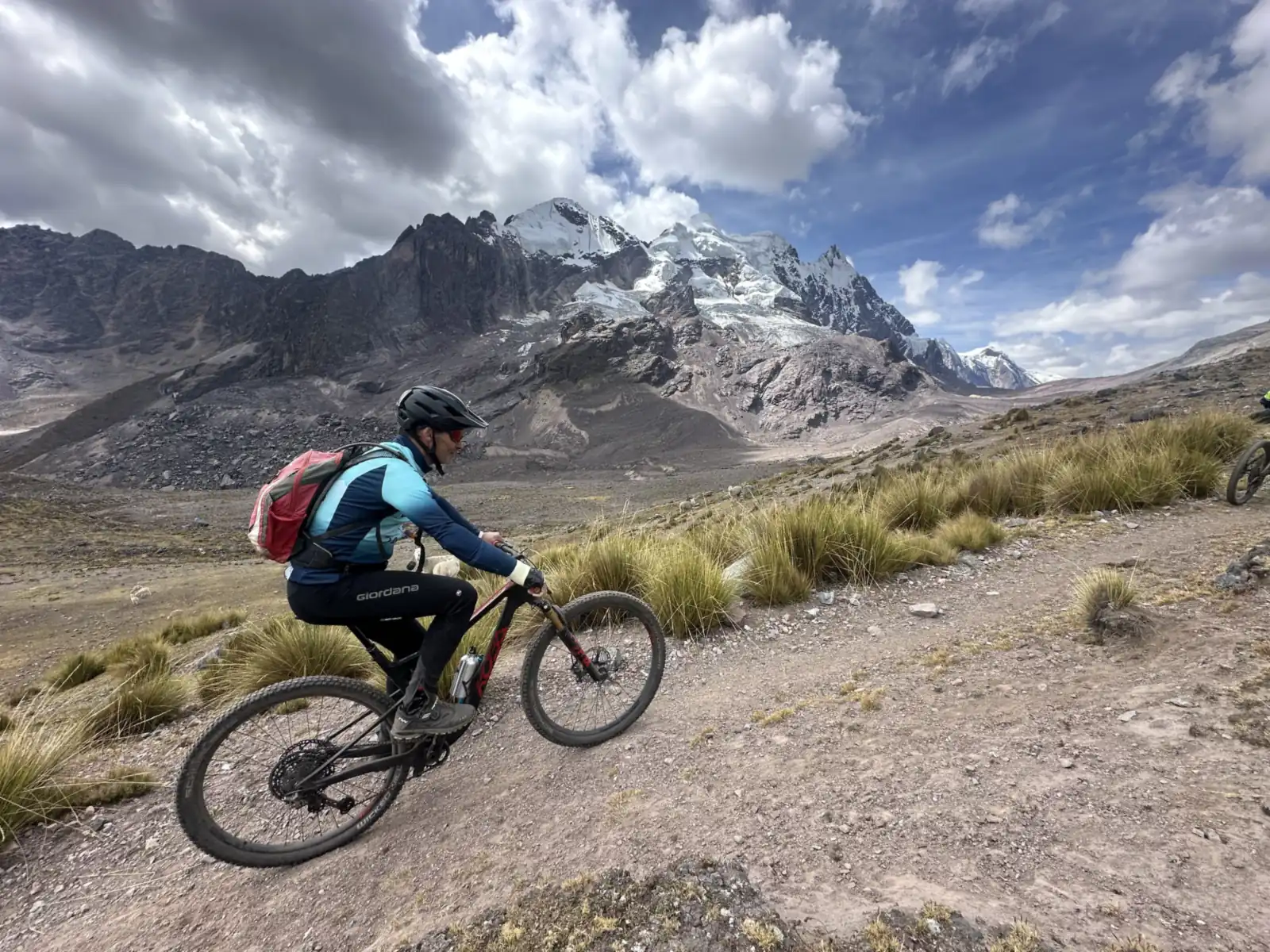
Anantapata (5,100 m), Qampa (5,100 m), Ausangate (4,950 m) and Arapa (4,800 m). Very few rideable routes in the world offer this.
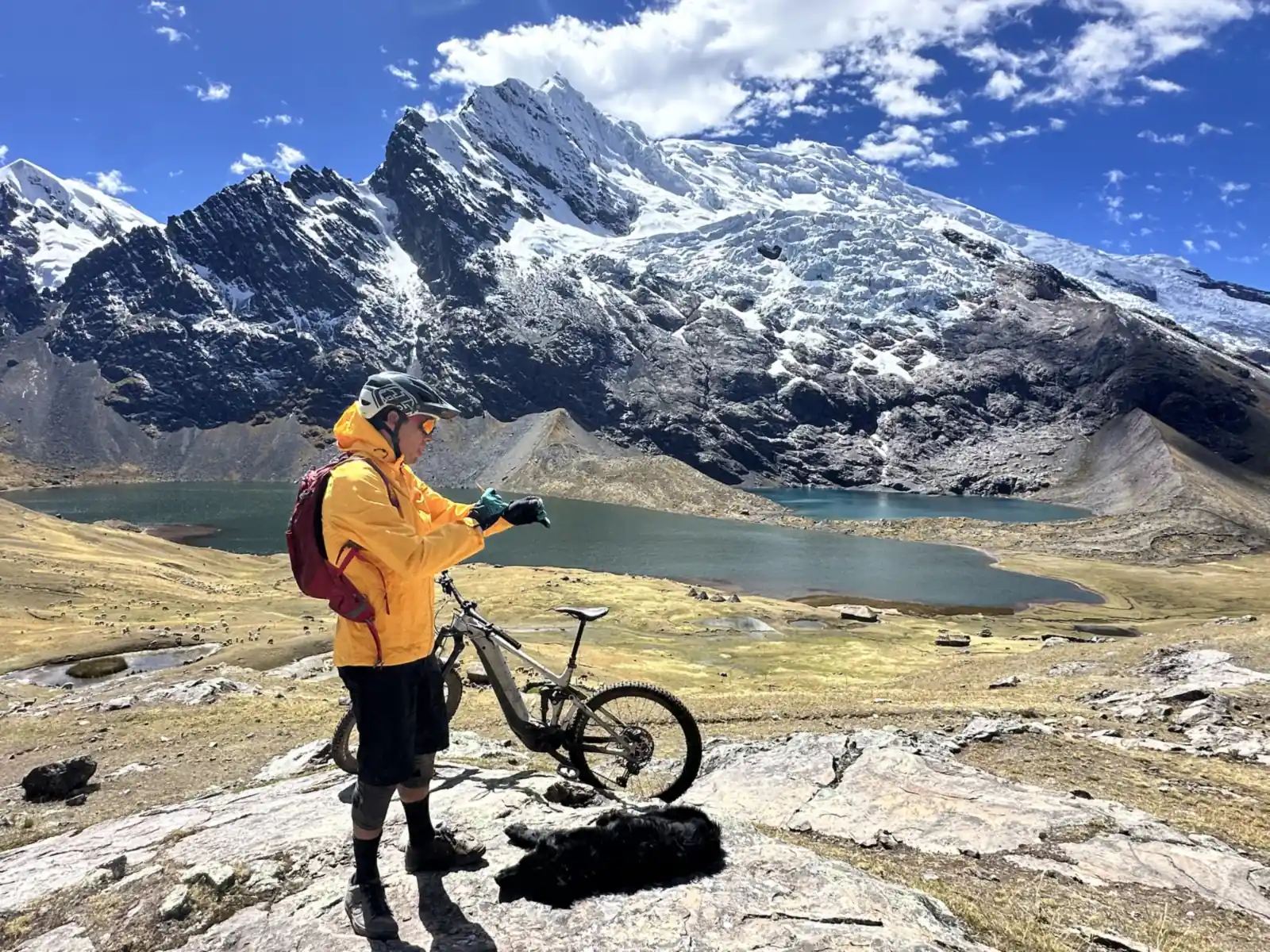
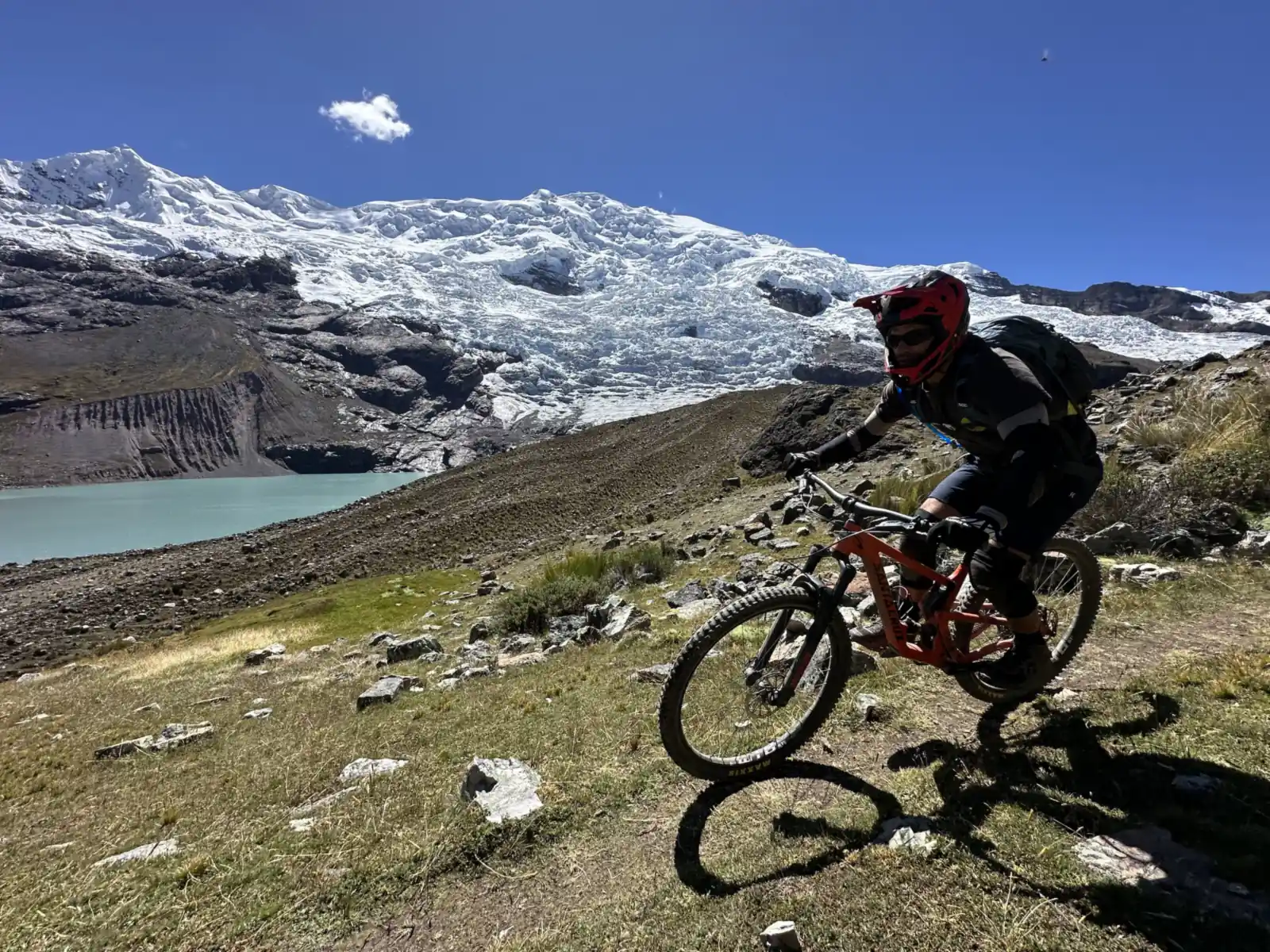
Ausangate for three days: glaciers, moraines and ice walls alongside every pedal stroke.
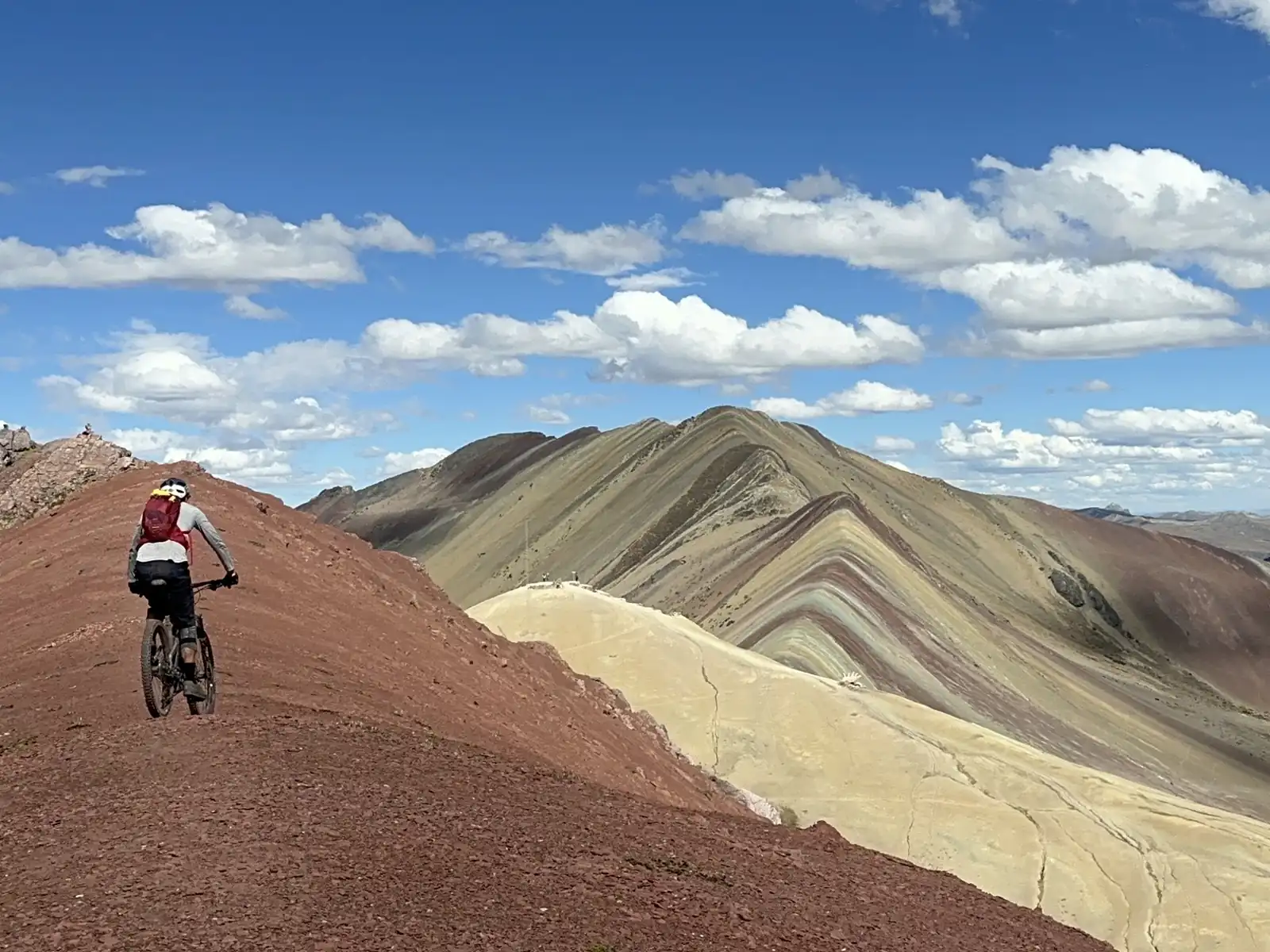
Both in the same day, and on a bike, while nearly every other visitor arrives on foot and in crowds.
Azulcocha, Otorongo, Pucacocha and Alqacocha on day 2; Pukacocha, Hatun Pukacocha and Qomerqocha on day 3. Turquoise, deep blue, emerald green and red, guarded by glaciers.
Llamas, alpacas, viscachas, falcons, Andean deer and, with luck, condors and puma.
Open air, at the foot of the glacier, at the end of day 2.
Sleeping in the high Andean communities, not in a camp isolated from them.
Complete first-aid medical kit with oxygen and satellite radios for areas with no signal.
High-end full-suspension enduro e-bikes, with battery charging points at both overnight stops.
Professional photos and video of the expedition.
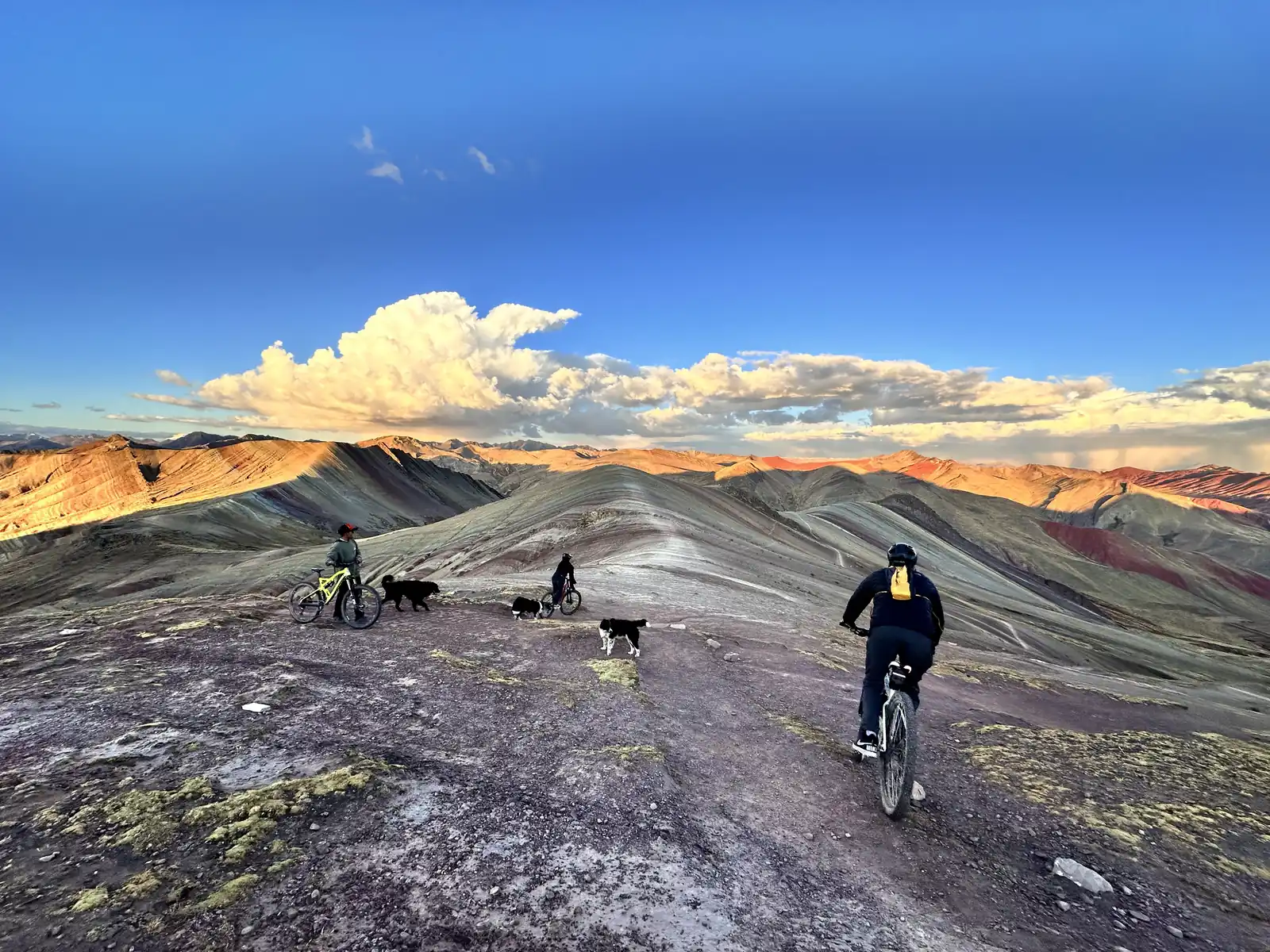
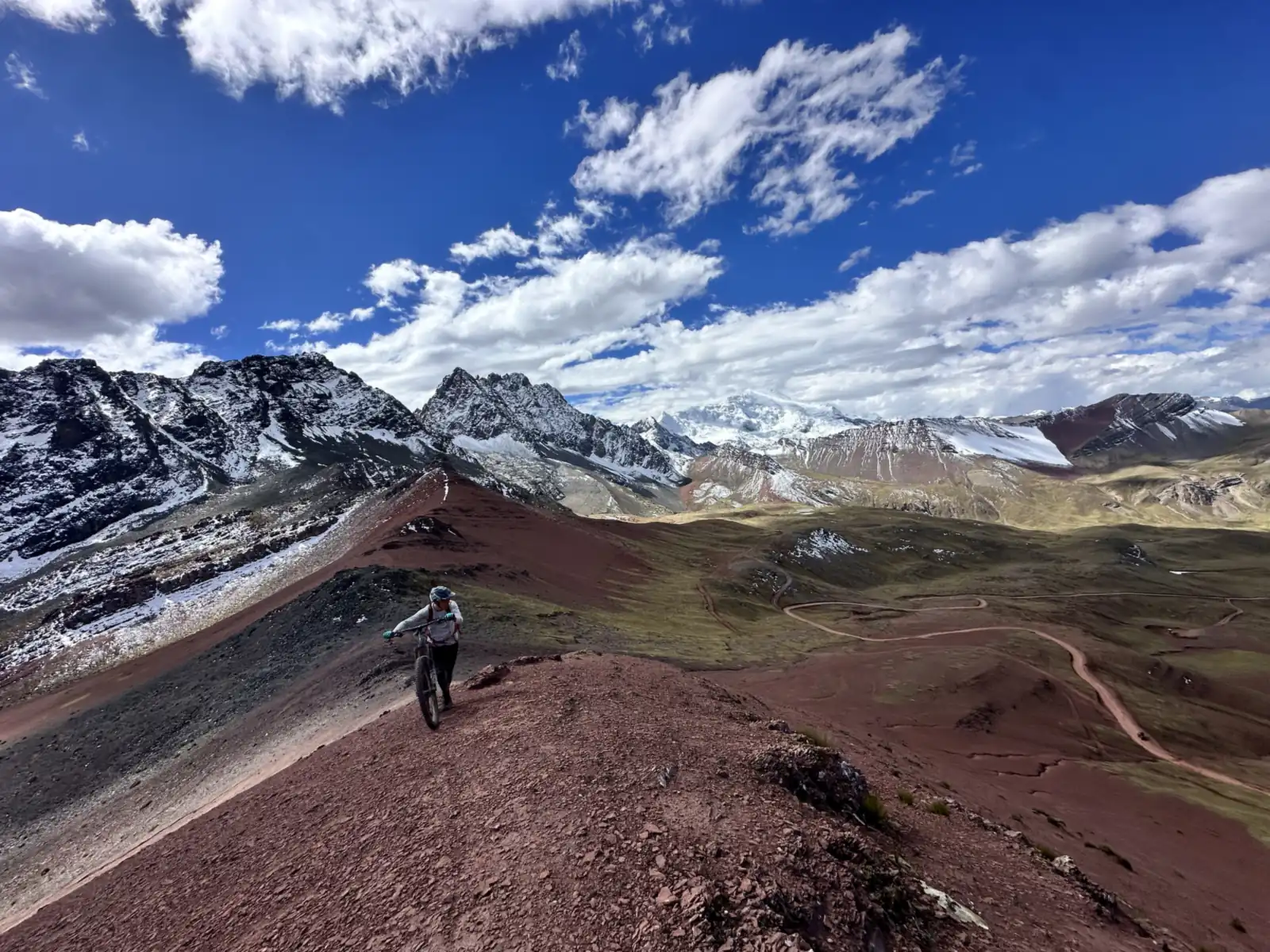
We set off early for the village of Pitumarca (3,570 m / 11,710 ft) and continue by vehicle to the Red Valley (4,150 m / 13,615 ft), where we get on the e-bikes. The climb starts immediately, between slopes and ravines stained deep red by iron oxidising in the sediment, up to the Red Valley viewpoint at 4,900 m / 16,075 ft: red waves set against the ochres and greens of the puna, with the snow peaks of the Vilcanota range closing the horizon. It receives a fraction of the visitors who reach the rainbow mountain.
From the viewpoint we link to Vinicunca, the Rainbow Mountain (5,000 m / 16,400 ft), with its bands of pink, yellow, green, purple, gold and brown. The traverse keeps climbing to Anantapata Pass (5,100 m / 16,730 ft), the high point of the day. Then the descent: a long, open glacial valley among herds of alpacas and llamas, down to the village of Chillca (4,300 m / 14,110 ft), where we spend the night in local family homes and charge the batteries.
Route Red Valley – Red Valley viewpoint – Vinicunca – Anantapata Pass – Anantapata valley – Chillca
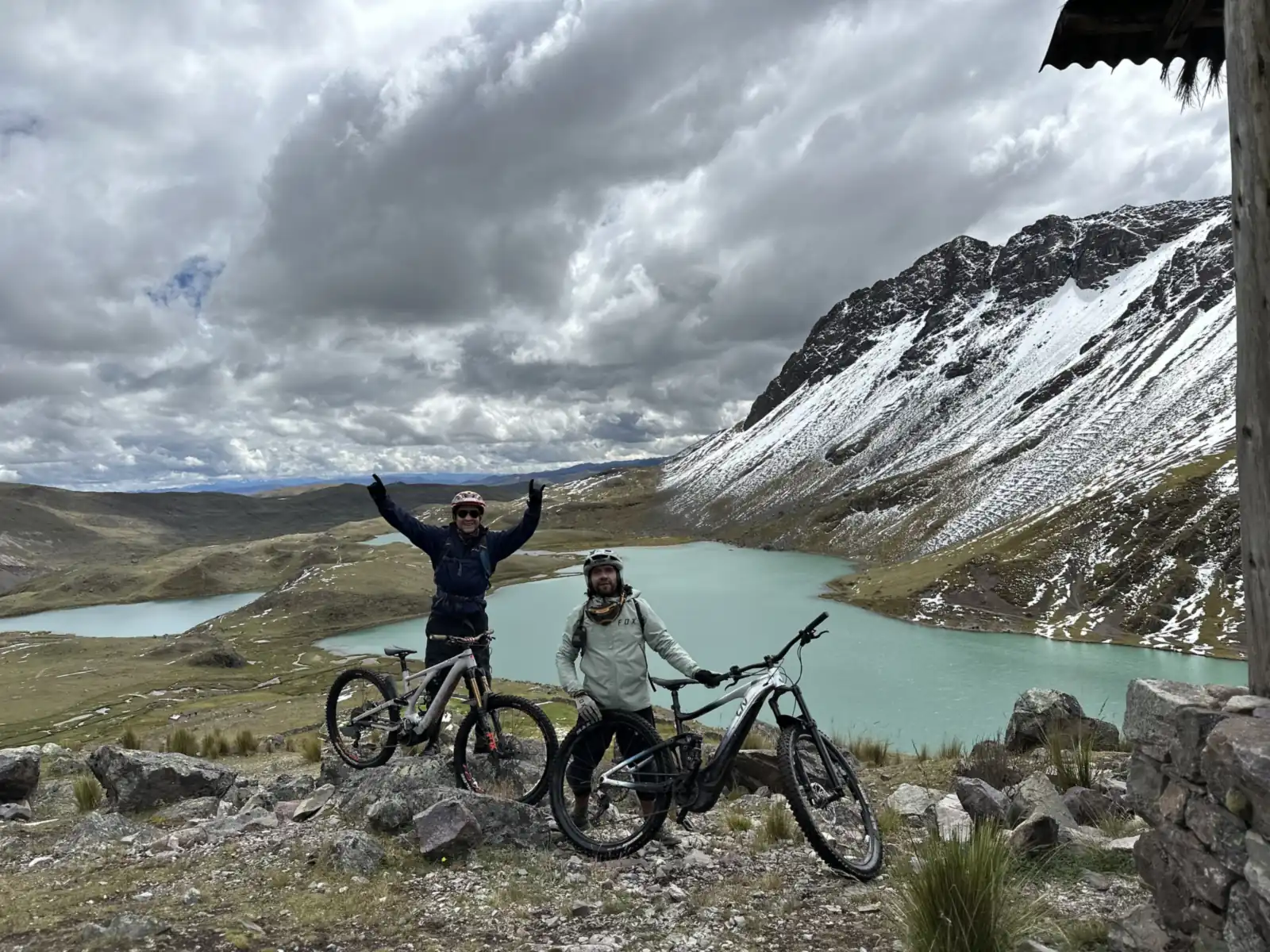
Breakfast with our hosts and a transfer to Huchuy Finaya (4,350 m / 14,270 ft), the start of the day's traverse. Today we ride alongside the Ausangate glacier, with the Apu dominating every pedal stroke, up to Qampa Pass (5,100 m / 16,730 ft), surrounded by glaciers and the snow peaks of the Vilcanota range. The second five-thousand-metre pass of the tour, and one of those views that justifies the whole trip.
From the summit, a very flowing descent through a corridor of coloured lagoons — Azulcocha, Otorongo, Pucacocha and Alqacocha — turquoise, deep blue and emerald green, shifting tone with the light. We reach Pacchanta (4,200 m / 13,780 ft) for the night, and close the day in the Pacchanta hot springs, open air, at the foot of the glacier, while the Apu turns pink at sunset.
Route Chillca – Huchuy Finaya – Ausangate glacier – Qampa Pass – Azulcocha / Otorongo / Pucacocha / Alqacocha – Pacchanta
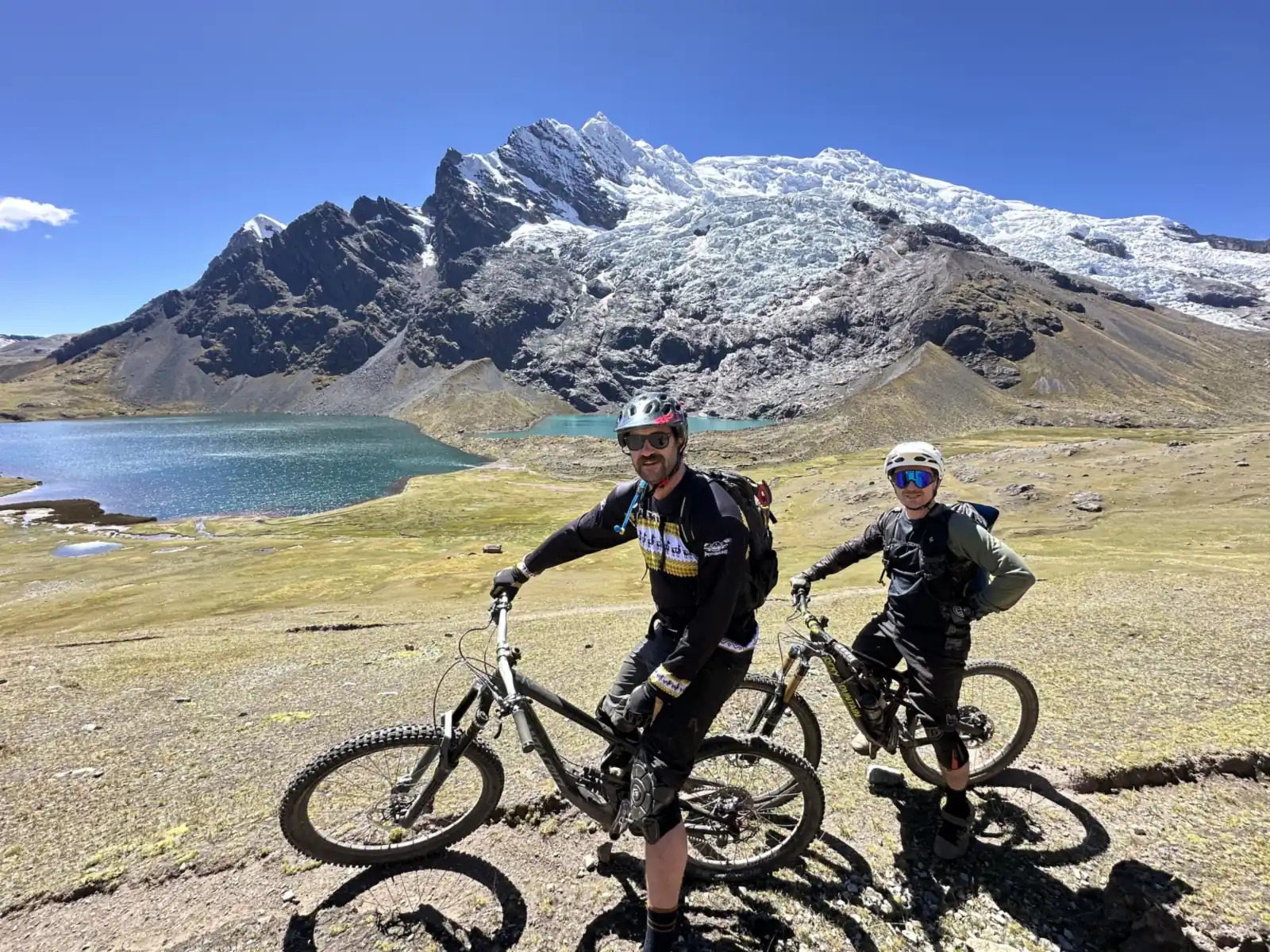
We ride out of Pacchanta across open, desolate high plains among llamas and alpacas to the Upis base camp (4,400 m / 14,435 ft), with a head-on view of the glacier. From here we climb to Arapa Pass (4,800 m / 15,750 ft) and drop to the glacial lagoons of Pukacocha, Hatun Pukacocha and Qomerqocha, in shades of red, green and turquoise. Pucacocha lies beneath one of Ausangate's glaciers; with luck you hear the ice calving into the water. This is also the best stretch for wildlife: viscachas, falcons, Andean deer and, with real luck, a puma.
A last climb crests Ausangate Pass (4,950 m / 16,240 ft). From there begins the best singletrack of the trip: packed with turns, hugely flowing, with the glacier right beside you, down to Ausangate Cocha (4,600 m / 15,090 ft), turquoise water guarded by walls of ice. We then link to Chillca, where the vehicle is waiting for the return.
Route Pacchanta – Upis – Arapa Pass – Pukacocha / Hatun Pukacocha / Qomerqocha – Ausangate Pass – Ausangate Cocha – Chillca
Prices per person in US dollars. The larger the group, the lower the price per rider.
Group departures on the 15th of every month: USD 850 per person (subject to availability). The most affordable way to ride this expedition if you are travelling solo or as a pair: join an existing group and pay the large-group rate.
The complete expedition: e-bike, protective gear, accommodation, day 2 and 3 breakfasts, guide, transport and permits.
Private transport and a professional MTB guide only. You bring your own kit. Need an e-bike? Add the daily rental.
High-end full-suspension enduro e-bike: USD 75 per day.
MTB guide only (8 hours): USD 125 per day.
35–50% deposit to confirm. Your deposit is never lost: with 30 days' notice you can reschedule within 12 months or transfer your booking to someone else. Travel insurance required.
About food: expedition format. This is a high-altitude traverse through remote country, so each rider manages the type and quantity of trail rations they need — nobody knows better than you what and how much to eat at 5,000 metres. You can buy rations and snacks in the villages where we stay, and at the end of each day the local families cook home-made Andean dinners at the lodgings. Breakfasts on days 2 and 3 are included.
The single most important thing about this tour. We require a minimum of 3 days at altitude before starting: day 1 crests at 5,100 m and both nights are spent at 4,300 and 4,200 metres. Without prior acclimatisation, the expedition is not enjoyable.
Amateur with experience or intermediate. If you move comfortably on blue and red trails, you are ready. The trails are open and flowing, with no severe exposure or committing technical sections. The difficulty lies in sustained altitude, not in the terrain.
The route crosses two 5,100-metre passes on consecutive days, entirely above 4,000 metres, where the air holds roughly half the oxygen it does at sea level. Electric assistance lets you complete the climbs and arrive at the top with energy left for the descents.
Both lodgings have charging points. We charge every night.
Dry season, April to October, ideally May to September. In the rainy season, January to March, the area is considerably harsher: snow on the passes, slippery ground and reduced visibility.
Sunny days with pleasant temperatures and nights below 0 °C. Thermal clothing is essential.
Maximum 6 riders per guide. Private departures available.
Layered thermal clothing, waterproof windbreaker, warm gloves, buff, beanie, high-factor sunscreen, sunglasses, hydration pack, head torch, your own trail rations for the three days, photo ID and cash in soles for the Tourist Ticket and purchases in the communities.
In Andean cosmology an Apu is a sacred mountain, a guardian deity protecting the communities at its feet. Ausangate is the most important Apu in Cusco, worshipped since Inca times and to this day. Every year its slopes host the Qoyllur Rit'i pilgrimage, inscribed by UNESCO as Intangible Cultural Heritage of Humanity.
Four in total. The highest point is 5,100 m / 16,730 ft, reached twice: at Anantapata Pass on day 1 and Qampa Pass on day 2. Day 3 adds Arapa Pass (4,800 m) and Ausangate Pass (4,950 m).
Yes. The lowest point across the three days is the Red Valley at 4,150 m. Not one stretch drops below that.
We carry a complete first-aid medical kit with oxygen, and our guides are certified in wilderness first aid (WFR). We also carry satellite radios to communicate from areas with no mobile coverage. That is why we require 3 days of prior acclimatisation: prevention is the best tool.
Because this is a high-altitude traverse and every rider has different energy needs. We would rather you manage your own rations based on your experience than impose a menu on you. You can stock up in the villages, and dinners are available at the lodgings.
In family homes in the communities of Chillca and Pacchanta. These are rustic, authentic lodgings, not hotels. It is part of the experience and also how this kind of tourism benefits the local communities directly.
We arrive by bike and on a different route to the mass tours, including the Red Valley, which sees a fraction of the visitors.
Yes. Pick-up and return are arranged from Cusco or the Sacred Valley, so it fits well before or after any of our other tours.
Ausangate Mountain Bike Trip: the Ausangate country on a conventional MTB.
Sacred Valley Enduro Singletrack: three days of flowing singletrack in the Sacred Valley.
Cusco & Sacred Valley Bike Experience: the gentlest introduction to riding around Cusco.

Tell us your level and your dates. We build the route and answer on WhatsApp the same day.
Tell us who's riding and when. We confirm availability on WhatsApp the same day.
