Cusco · Peruinfo@perubiking.com+51 958 348 300
The most complete mountain bike expedition in the Peruvian Andes: eleven days that start on the cobbled streets of Cusco and end on the ice of Ausangate, with Machu Picchu along the way.
It's exactly the time it takes for a trip to stop being a checklist of sights and become a story. This is the only mountain bike expedition that ties together, in one continuous itinerary from start to finish, the ancestral trails of Cusco, the citadel of Machu Picchu with the climb to Huayna Picchu, and a final e-bike traverse to the glacier of the Apu Ausangate and the world-famous Rainbow Mountain.
The expedition unfolds in three distinct chapters:
Think of this as a ladder of difficulty, not an entrance exam. The first days are flowing trails with a shuttle to every trailhead — a good way to warm up. By midweek, Lares and Lamay raise the bar with rock gardens and technical switchbacks. Machu Picchu arrives right on time as a well-earned pause.
You need solid fitness and the stamina to keep the pace for nearly two weeks. If you arrive with the acclimatisation days we recommend, by the time you reach Ausangate you'll be fully focused on the scenery: glaciers, coloured lagoons and trails opening up above 5,000 metres.
Is eleven days more than you can commit to right now? We have three 3-day programmes that cover pieces of this same expedition: Cusco & Sacred Valley Bike Experience, Sacred Valley Enduro Singletrack and the Ebike Ausangate Expedition.
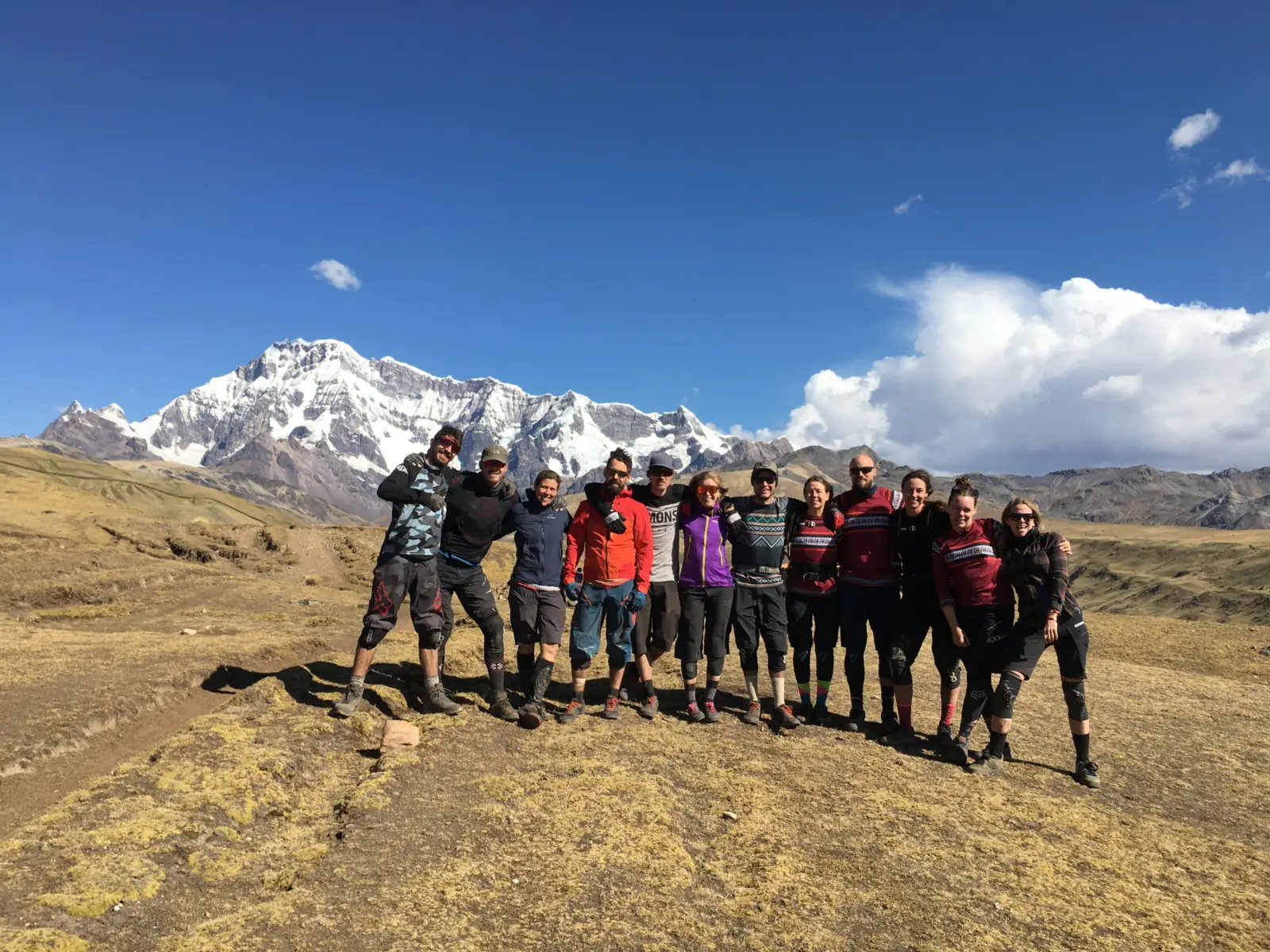
Cusco, Machu Picchu and Ausangate built into a single coordinated trip — no trains or permits to sort out on your own.
Both the enduro MTB and the Ausangate e-bike are included in the price. Most long-expedition operators in Peru charge this separately; we don't.
Bring your own mountain bike for the five MTB days of the programme and pay less — without missing a single day of riding.
Train, entry ticket and a specialised guide already arranged, instead of leaving that logistics puzzle for you to solve later.
Anantapata Pass and Qampa Pass, with the Apu Ausangate present the whole way. You arrive at this altitude already acclimatised, with all your attention on the glacier and the landscape around you.
Without the lines and crowds you see in photos of the walking tours.
At the foot of the glacier, as the physical and emotional close of the traverse.
The weavings of Patacancha, the red ponchos of Willoc, and the families of Chillca and Pacchanta who welcome you into their own homes.
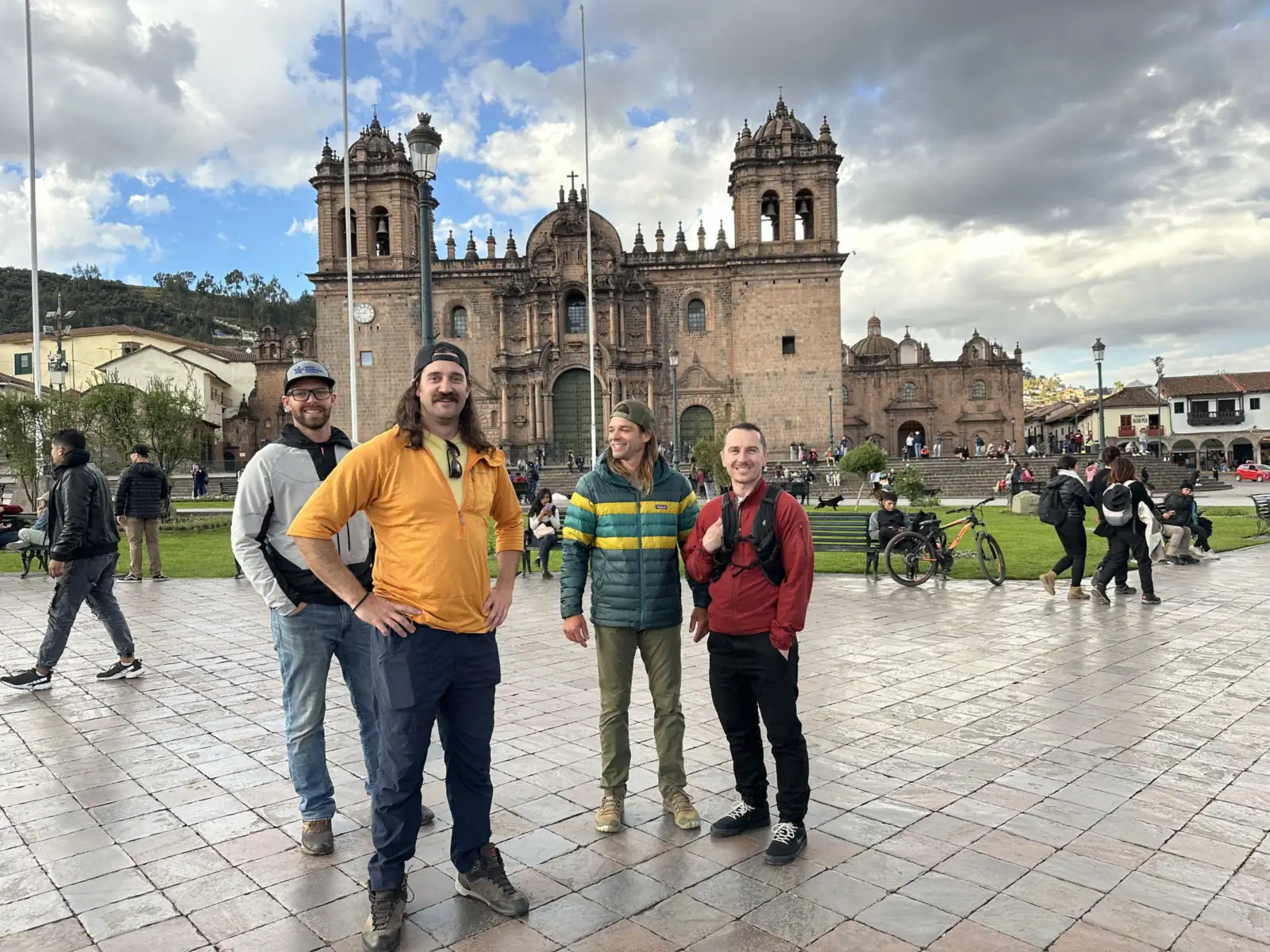
You land in Cusco (3,500 m / 11,480 ft), the former capital of the Inca empire. We pick you up at the airport and take you to your hotel, steps from the Plaza de Armas.
That same afternoon we get your bike adjusted and ready, so there are no surprises the next morning. In the evening, a welcome dinner where we walk through, map in hand, the eleven days ahead of you.
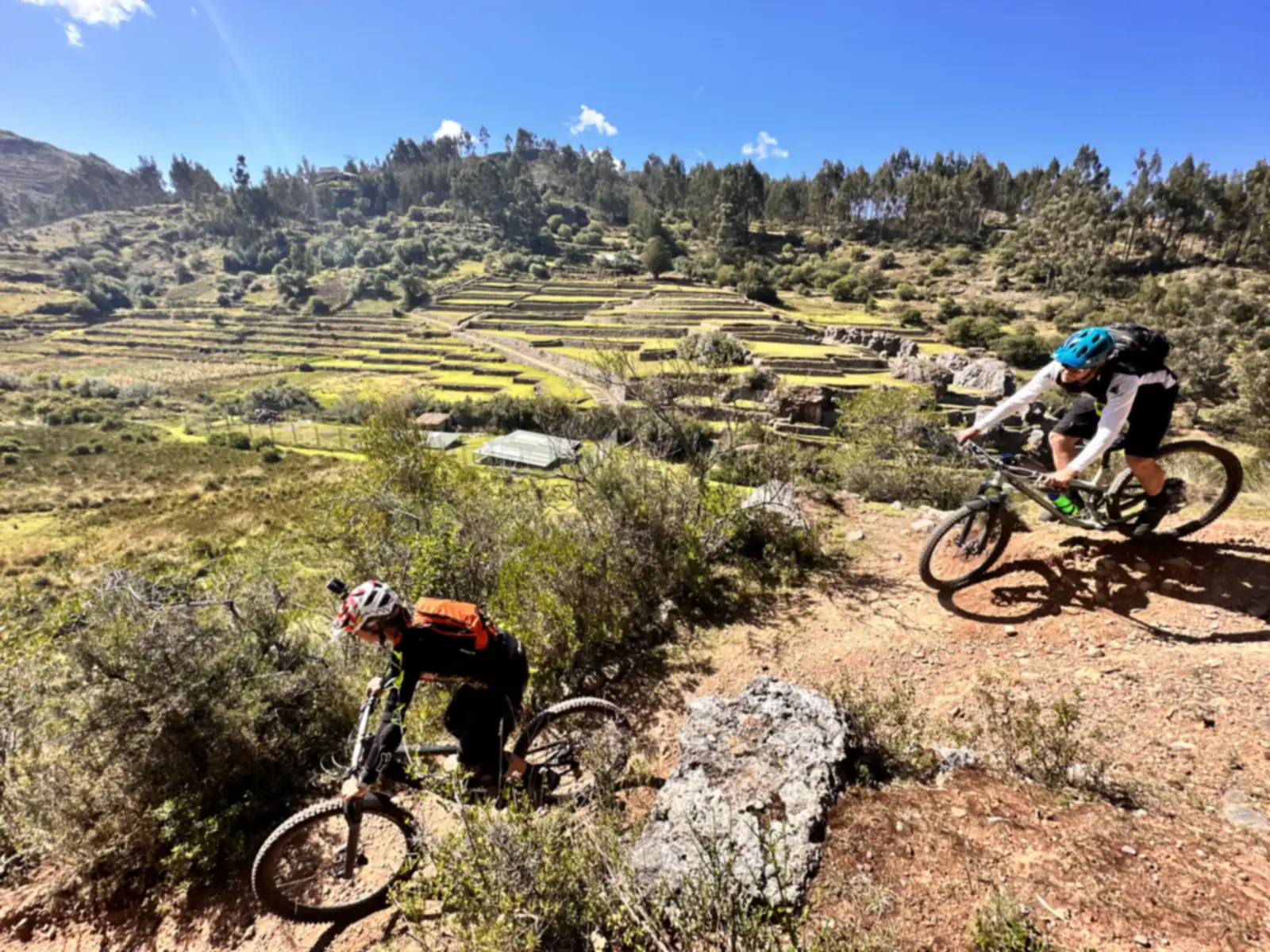
The first pedal stroke of the trip climbs to Yuncaypata Pass (4,000 m / 13,120 ft), through eucalyptus forest and ravines. From there, the city becomes your map: Sacsayhuamán and its megalithic walls, Qenqo carved straight into living rock, the enigmatic Temple of the Moon, and Huayllarcocha lagoon, a natural balcony over the valley.
We close with what everyone remembers about this day: an urban descent through cobbled streets and neighbourhoods steeped in history, finishing a few steps from the Plaza de Armas.
Trails: Huayllarcocha · Inca Cárcel · Salkantay Pueblo · Yuncaypata & Urban Descent
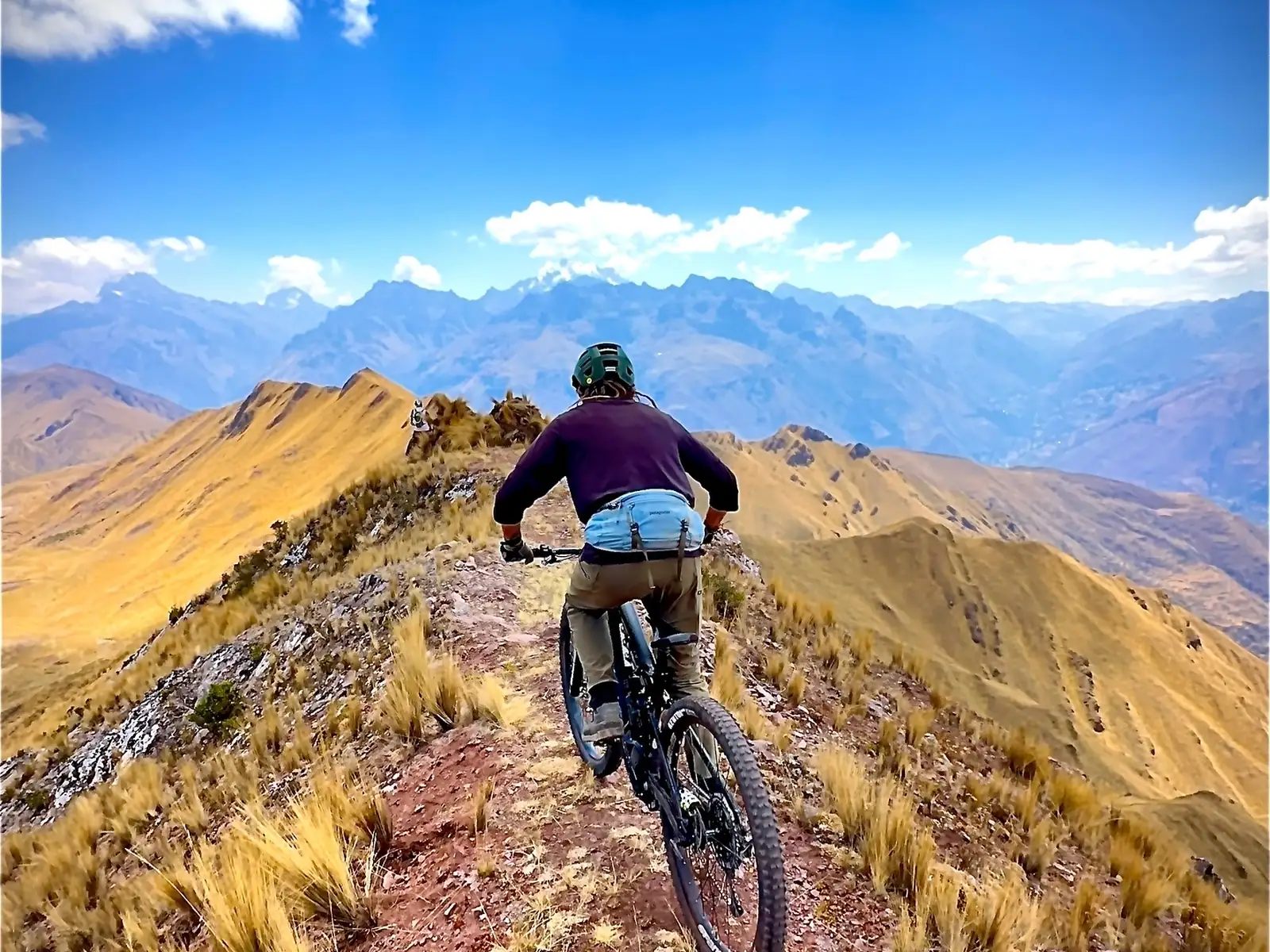
We start beside Lake Qoricocha (4,020 m / 13,190 ft) — the "Golden Lake", where legend says the Incas hid their treasures from the conquistadors. We ride along its shore and climb a few hills to 4,200 m / 13,780 ft, where a long descent begins along a relatively new corridor between Cusco and the Sacred Valley: open páramo, high-altitude lagoons, and herds of llamas that barely notice you.
The trail starts open and flowing, turning technical further down with switchbacks and rock gardens, until it drops into Calca (2,800 m / 9,190 ft), already in the Sacred Valley.
Route: Lake Qoricocha · high hills · Huchuy Qosqo · Calca
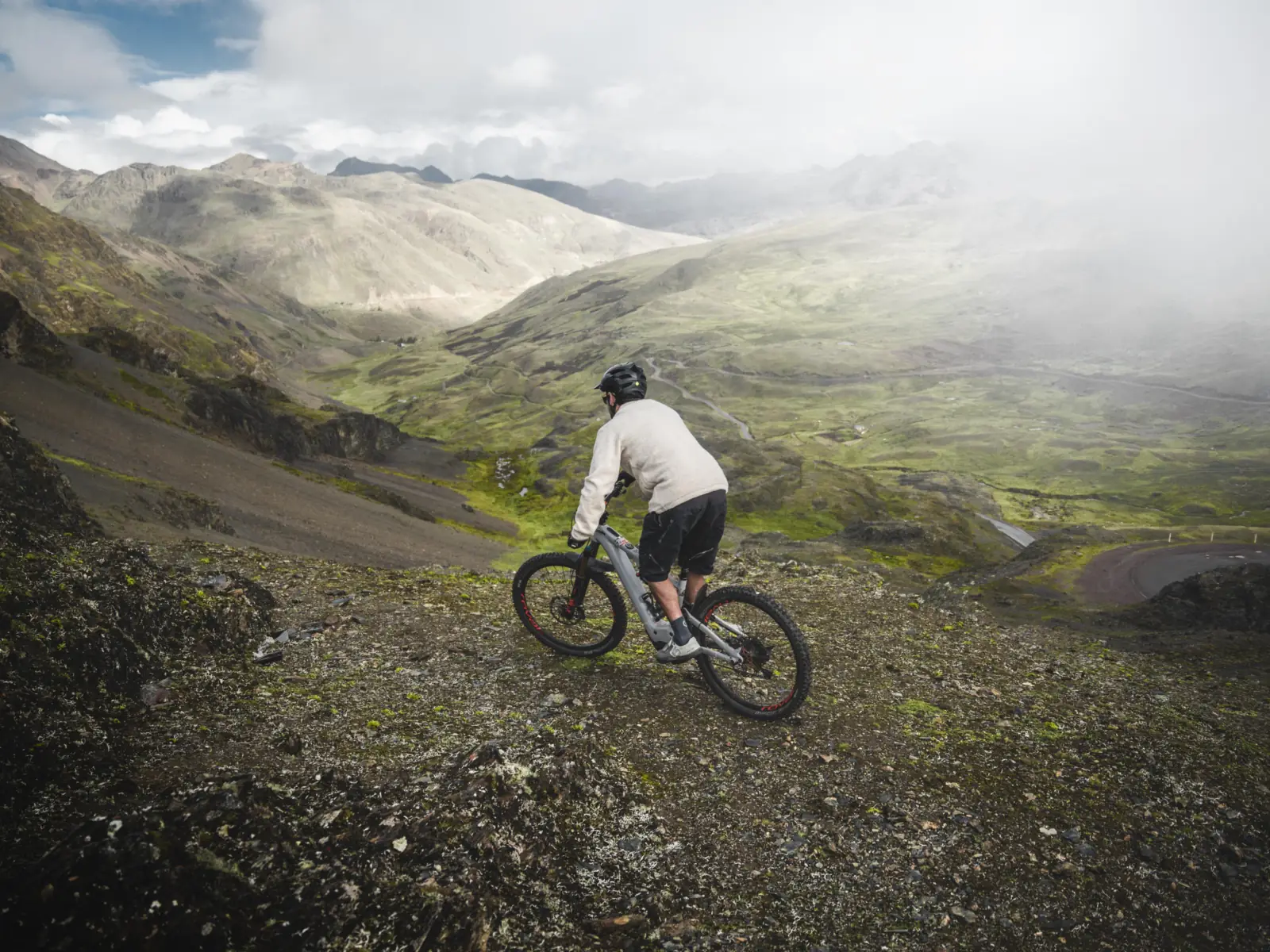
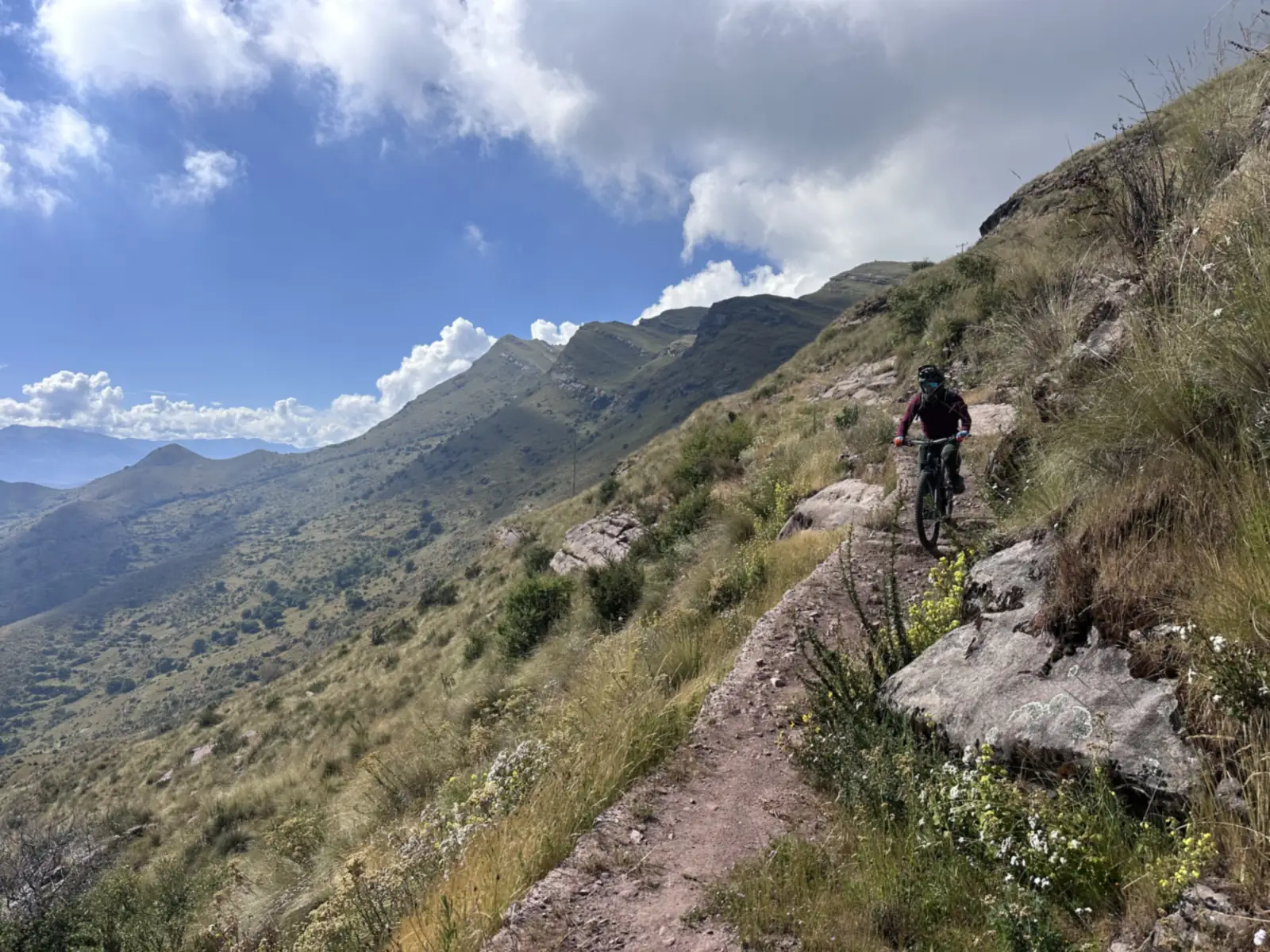
This is the day most riders talk about long after the trip ends. We climb to Abra de Lares (4,461 m / 14,635 ft), where the fun begins: 17 kilometres of descent — Lares Classic with extension — through ancestral Inca trails, open valleys and mountains that feel endless, dropping back into Calca.
After a traditional lunch, we shift scenery entirely: the community of Sapaccto, in Lamay (4,310 m / 14,140 ft), where the Lamay Sapaccto Classic begins — 15 kilometres of narrow, fast, wonderfully flowing trail through villages that still live exactly as they have for generations.
Trails: Lares Classic + extension (17 km) · Lamay Sapaccto Classic (15 km)
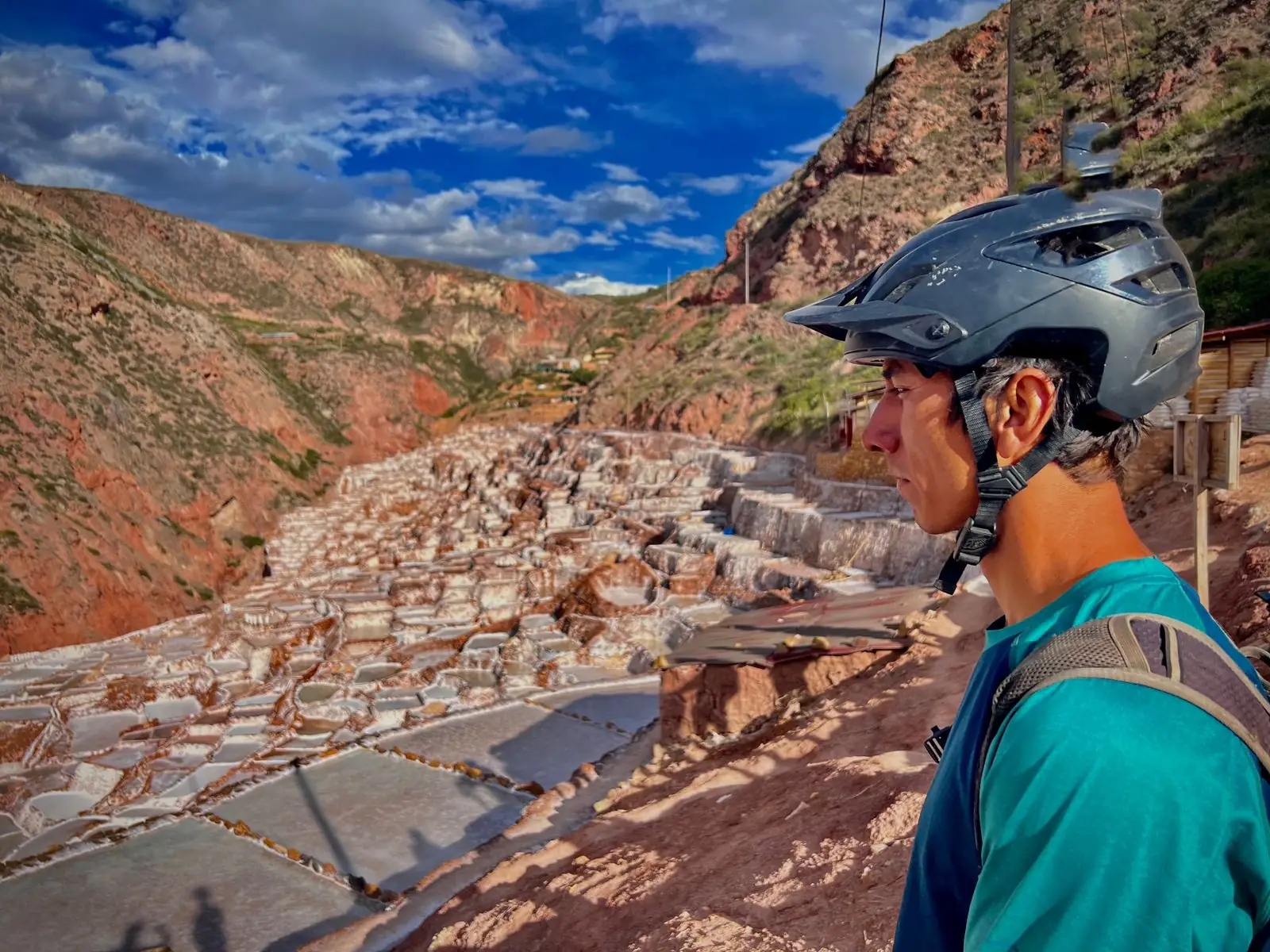
Your legs already know technical Andean singletrack; today is about the scenery. We cross the Maras plateau, an open red-earth highland with the Urubamba range always on the horizon, and drop to Moray, the circular complex the Incas used as an agricultural laboratory. We finish at the Maras Salt Mines, more than 3,000 salt pools worked by the same families since pre-Inca times.
The moment you step off the bike, there's no rest: we pack up and head straight to the Ollantaytambo train station, bound for Aguas Calientes, the gateway to Machu Picchu.
Trails: Maras Clásico · Misminay & Moray
A full day off the bike, dedicated to what many travellers consider the very reason to come to Peru. We explore the Machu Picchu citadel with a specialised guide, and climb Huayna Picchu mountain, whose panoramic view is reserved for those who dare to make the ascent.
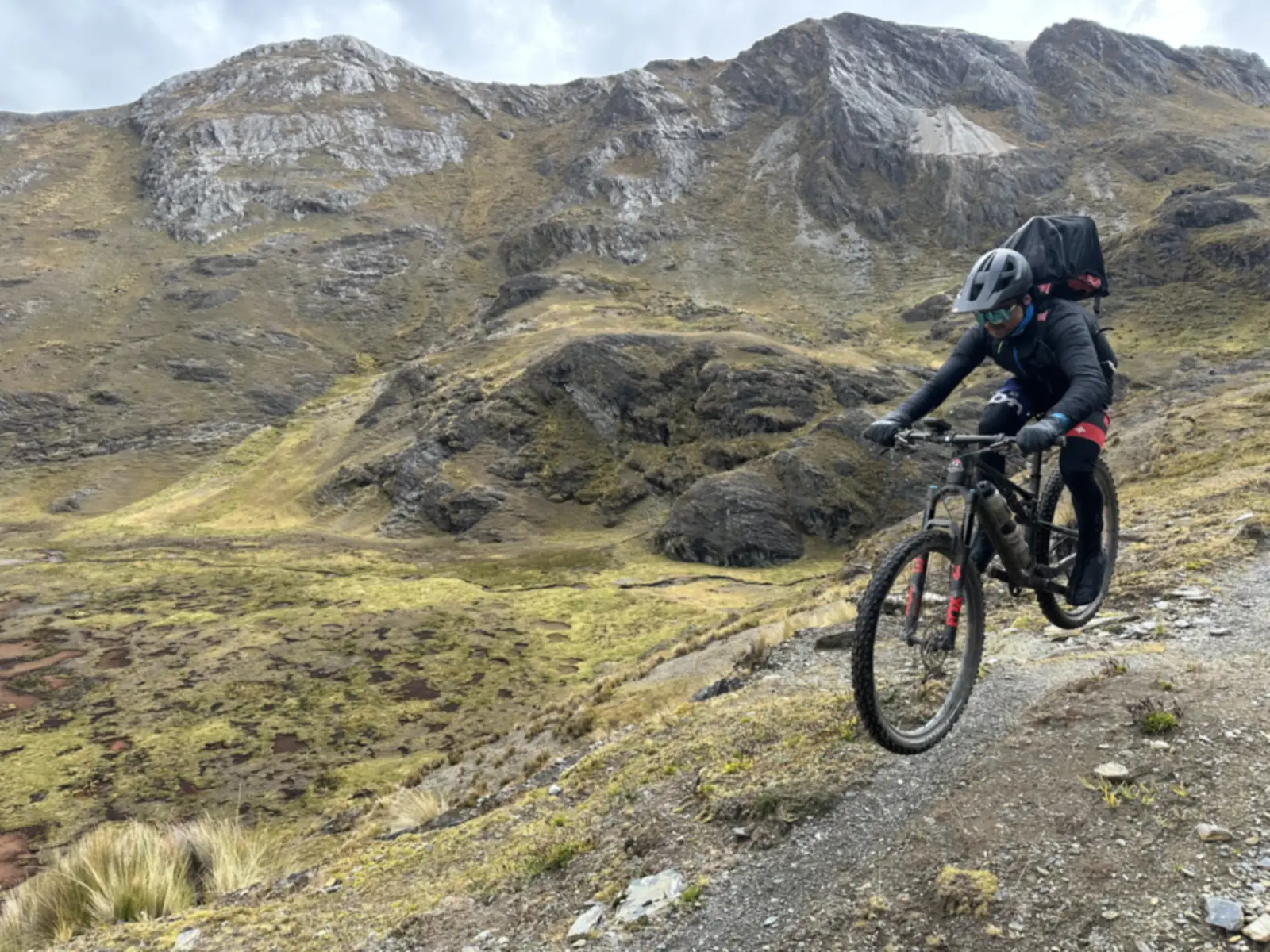
Back on the bikes. We pick you up at the Ollantaytambo train station, gear already sorted, and climb to Yanamayo Pass (4,500 m / 14,760 ft), the high point of the day.
From the pass the descent drops towards the community of Patacancha, where women still weave using techniques and natural dyes passed down from their grandmothers, and continues to Willoc, a community instantly recognisable by the red ponchos its people wear. Further down, the Inca fortress of Pumamarca, rarely visited, with terraces almost perfectly preserved.
We finish near Ollantaytambo (2,800 m / 9,190 ft), where we return you to your accommodation in the Sacred Valley.
Route: Yanamayo Pass · Patacancha · Willoc · Pumamarca · Ollantaytambo
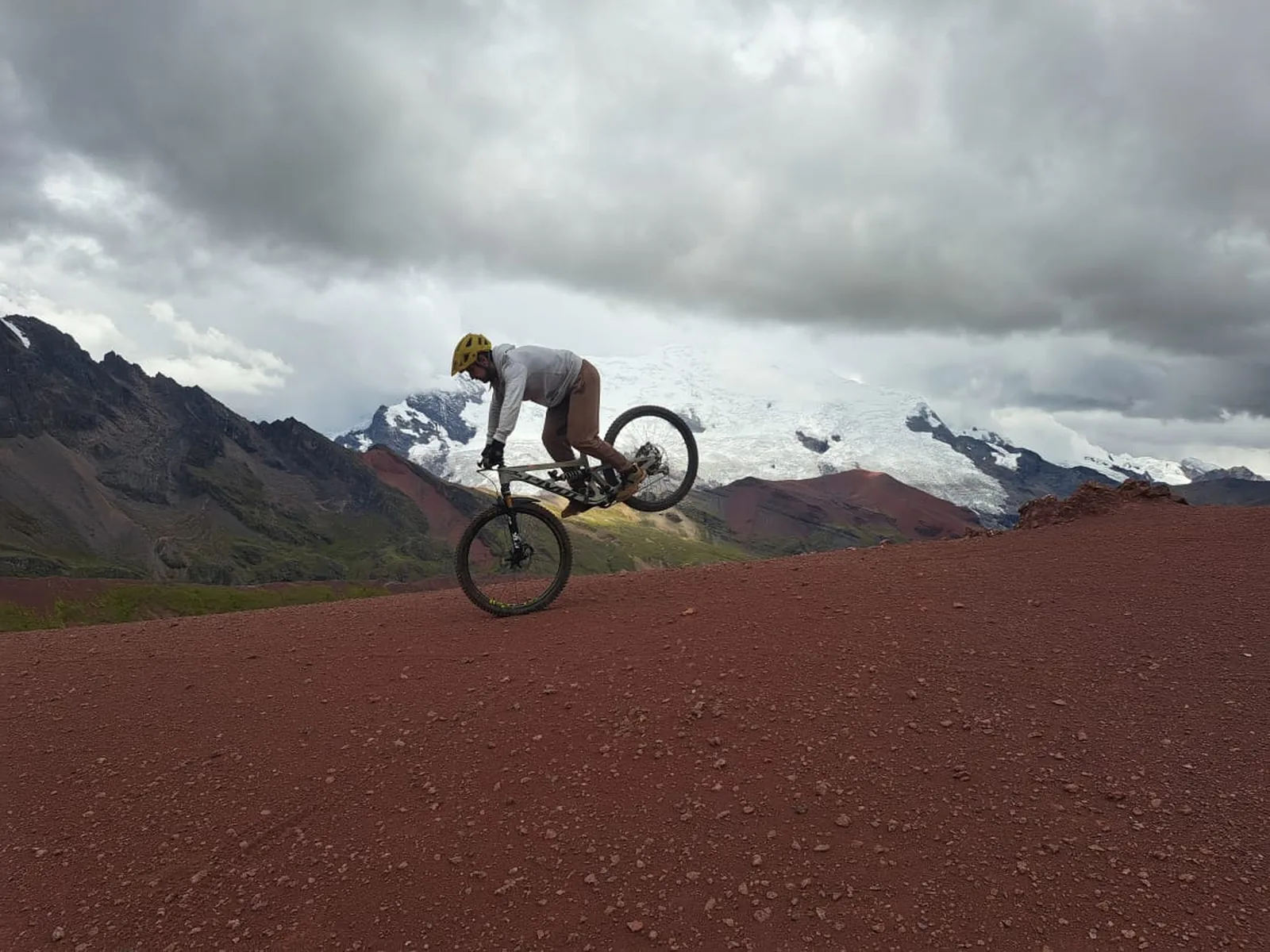
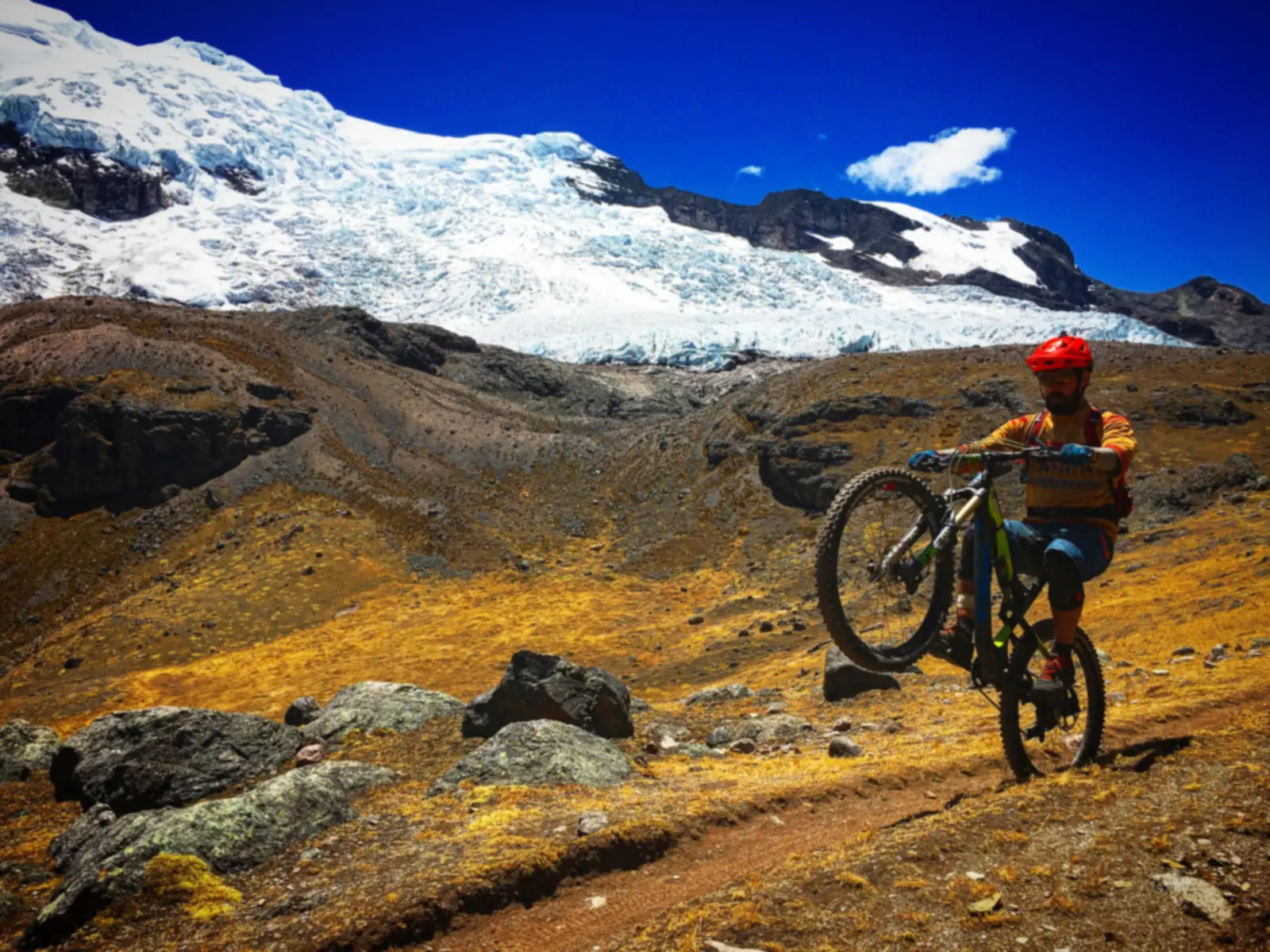
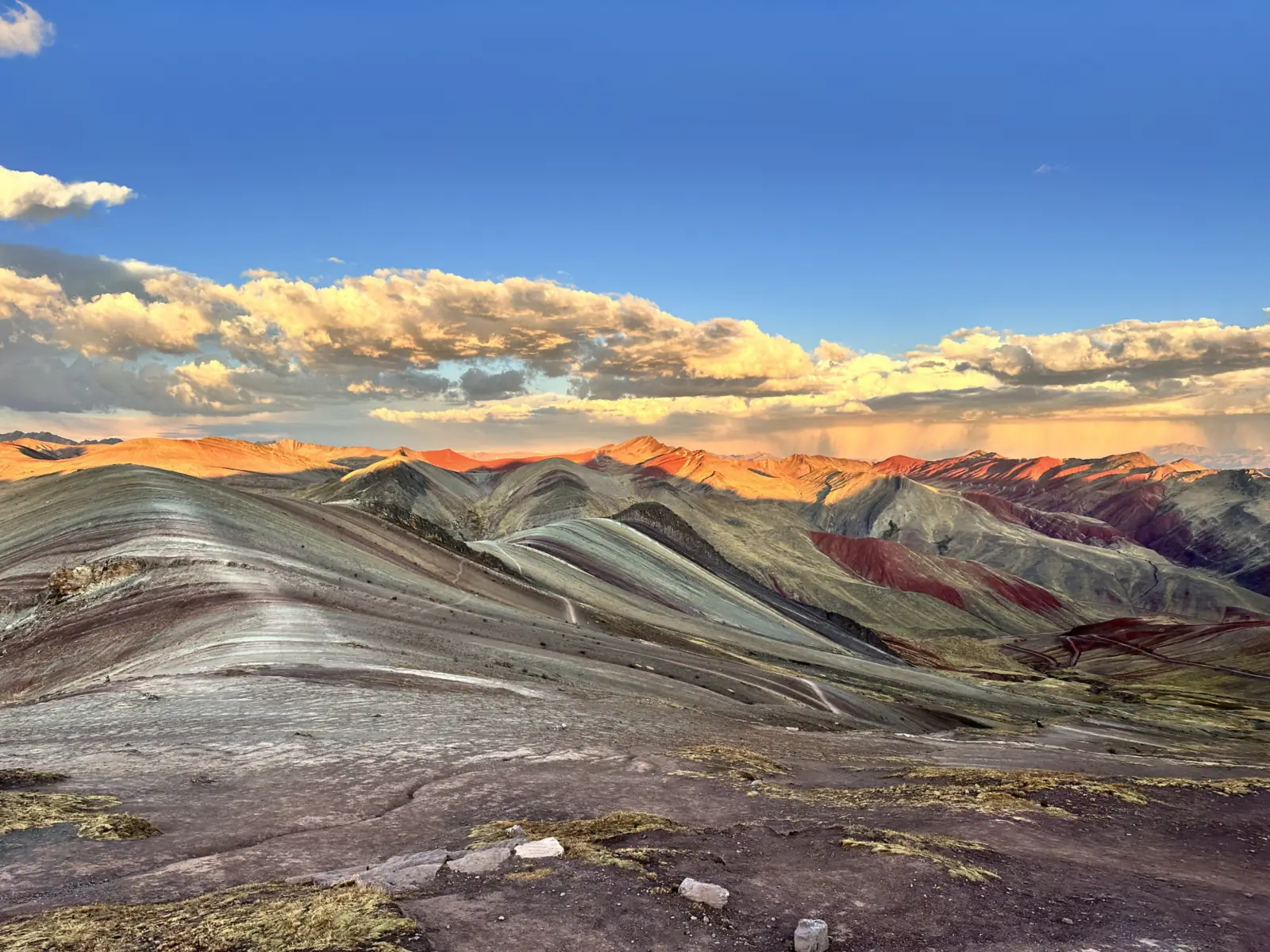
Everything changes here: the bike, the landscape, the challenge. We head to Pitumarca (3,570 m / 11,710 ft) and reach the Red Valley (4,150 m / 13,615 ft), where you get on the e-bike for the first time. We pedal between slopes stained deep red — iron oxidising in the sediment — up to the Red Valley viewpoint (4,900 m / 16,075 ft), then link to Vinicunca, the Rainbow Mountain (5,000 m / 16,400 ft).
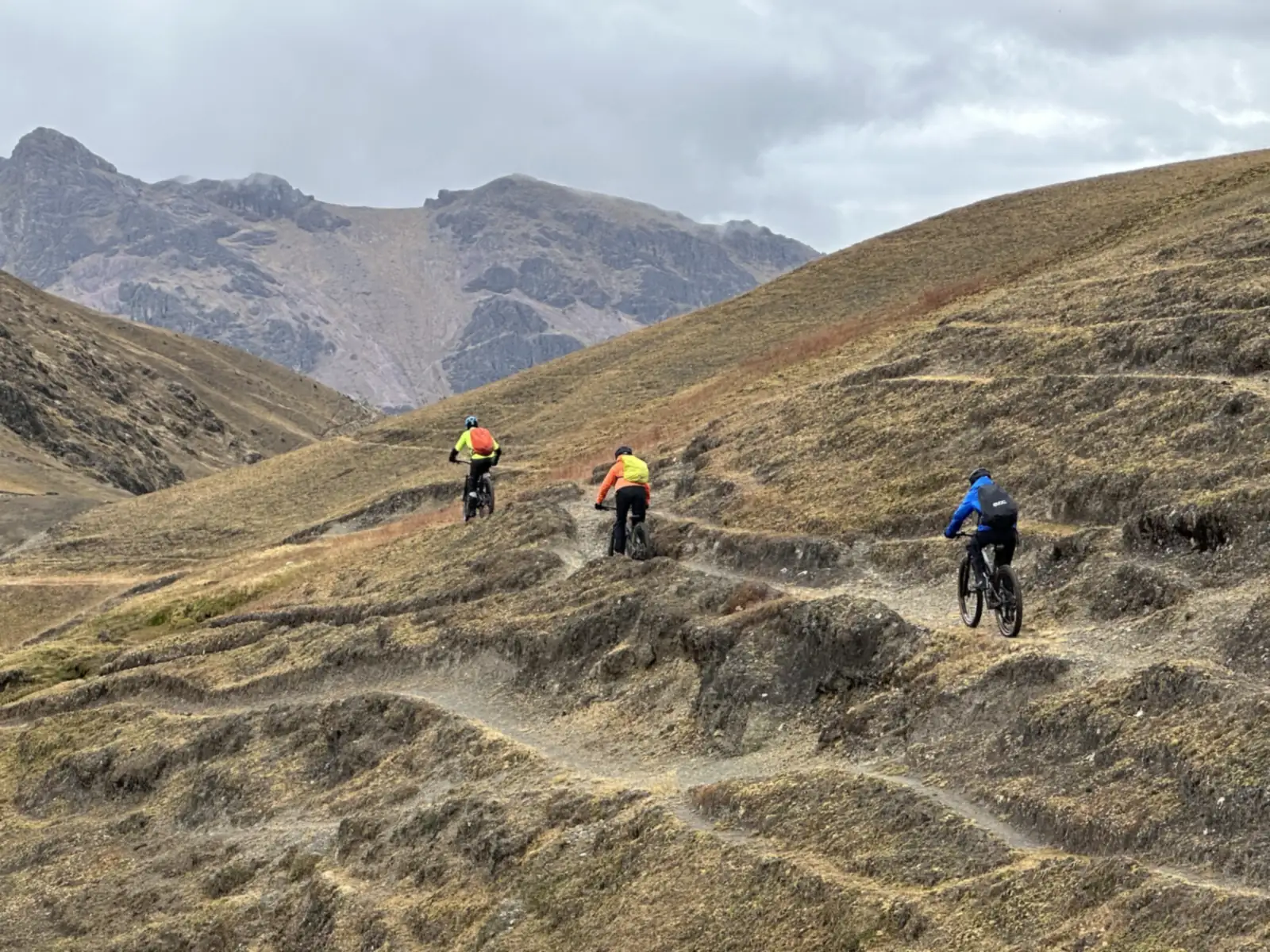
We keep climbing to Anantapata Pass (5,100 m / 16,730 ft), the first of the trip's two summits, and drop through alpaca herds down to the village of Chillca (4,300 m / 14,110 ft).
Route: Pitumarca · Red Valley · Vinicunca · Anantapata Pass · Chillca
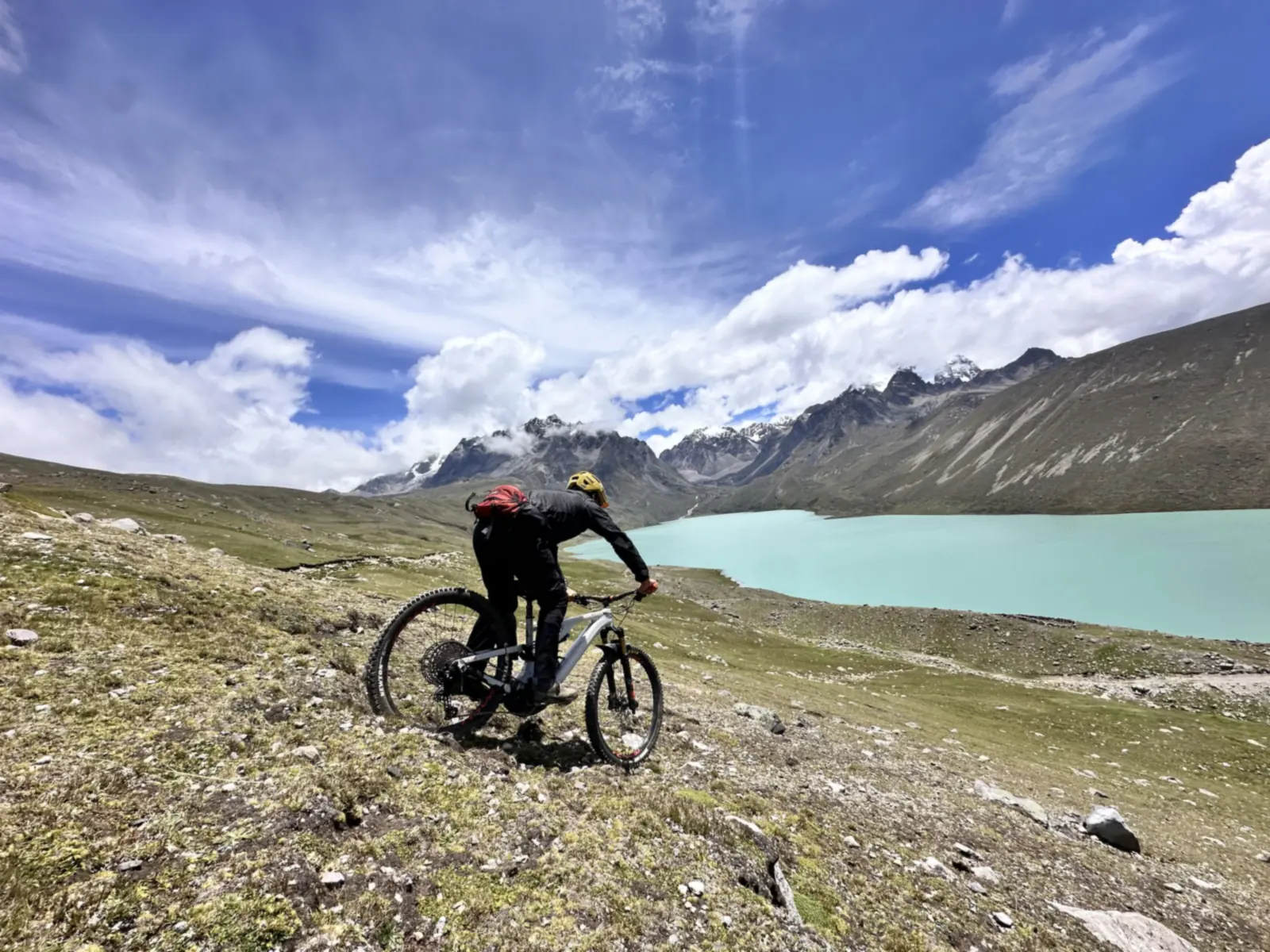
The day that closes the expedition. We have breakfast in Chillca and transfer to Huchuy Finaya (4,350 m / 14,270 ft), with the Ausangate glacier already dominating the horizon. We climb to the trip's second summit, Qampa Pass (5,100 m / 16,730 ft), then drop through a corridor of coloured lagoons — Azulcocha, Otorongo, Pucacocha and Alqacocha — down to Pacchanta (4,200 m / 13,780 ft).
The perfect close: the Pacchanta hot springs, at the foot of the glacier, watching the sunset after cresting two 5,100-metre passes in two days.
Route: Chillca · Huchuy Finaya · Ausangate glacier · Qampa Pass · coloured lagoons · Pacchanta
Morning transfer back to Cusco. A free day to rest, take in everything you've just experienced, or squeeze in one last walk around the city. Overnight in Cusco.
The Incas had no word for "goodbye". They believed every farewell was brief, and that sooner or later you'd meet again with whoever was leaving. So they said "Tupananchiskama": until we meet again. Transfer to Cusco airport.
Prices per person in US dollars. The larger the group, the lower the price per rider.
A USD 50 per-person discount applies for each of the 5 MTB days (days 2, 3, 4, 5 and 7) if you bring your own mountain bike. On Ausangate (days 8 and 9) we always use our high-end e-bike, no exceptions: it's remote country with no mobile signal, and we manage the batteries ourselves every night.
2026: private departures only. From 2027, fixed group departures:
Check availability and book ahead, especially for the July departure — Cusco's high season.
The complete programme: bike, accommodation, meals, Machu Picchu, train and everything else listed below, sorted.
Private transport and guide only. Ideal for riders who already have their own accommodation — high-end, budget, or an Airbnb — and prefer to sort their own meals. No bike, accommodation, meals, Machu Picchu or train: for those who manage everything else themselves and would rather spend on other things.
35–50% deposit to confirm. Your deposit is never lost: with 30 days' notice you can reschedule within 12 months or transfer your booking to someone else. Travel insurance required.
Enjoy the altitude instead of feeling it. By the time you reach Ausangate, on day 8, you'll already have a full week of riding above 3,500 metres behind you. Most of our riders are fully acclimatised by the second or third day of the programme, so the final stretch is lived with all your energy on the scenery — glaciers, coloured lagoons, sunset at the hot springs — not on your breathing. We just ask that you spend 2 or 3 days in Cusco before starting, so you arrive in the best shape from the very first pedal stroke.
You need previous experience on mountain trails and solid fitness, above all to sustain the pace for nearly two weeks. The most technical riding is concentrated in Lares and Lamay; the Ausangate finale is a high-altitude traverse over open, flowing terrain.
Because there, we want you to enjoy the glacier, the lagoons and the landscape without the pedalling stealing your attention. Electric assistance lets you reach the top with plenty of energy left simply to take it all in.
Dry season, April to October. Clear skies and firm trails throughout the route — something that matters even more on the two high-altitude days.
Layered sportswear, thermal clothing for Ausangate, waterproof windbreaker, high-factor sunscreen, sunglasses or goggles, your own gloves, hydration pack, photo ID, and cash in soles for the Tourist Ticket and personal purchases.
Maximum 6 riders. Private departures available year-round; ask about fixed group dates from 2027.
Because coordinating three different experiences — trains, permits, lodging in different zones — is exactly what this programme solves for you. One itinerary, one payment, one team accountable for everything.
Peru's Ministry of Culture limits daily access. We arrange your reservation with the necessary lead time as soon as you confirm your programme.
Yes. The itinerary is built for exactly that: seven days of riding at altitude before reaching the 5,100-metre passes. By day 8, your body already knows the altitude, and what's left is enjoying the most spectacular scenery of the trip.
It applies to the five MTB days (Cusco, Lares and Lamay, Maras and Moray, Patacancha): USD 50 per person for each day you use your own bike. In Ausangate we always use our e-bike, no exceptions.
Full VIP is the complete programme: bike, accommodation, meals, Machu Picchu, train and everything else sorted. Express is private transport and a guide only — built for riders who've already chosen their own accommodation (high-end, budget, or Airbnb) and prefer to handle their own meals, saving there to spend on other things during the trip.
In 2026 the programme runs as private departures only. From 2027 we open three fixed group departures a year: April, July and October.
Cusco, Maras, Moray, Patacancha and Pumamarca in 3 days, shuttle-assisted.
The technical side of the Sacred Valley: Lares, Lamay and more in 3 days.
Rainbow Mountain, the Red Valley and two 5,100 m passes by e-bike in 3 days.

Tell us your level and your dates. We build the route and answer on WhatsApp the same day.
Tell us who's riding and when. We confirm availability on WhatsApp the same day.
